

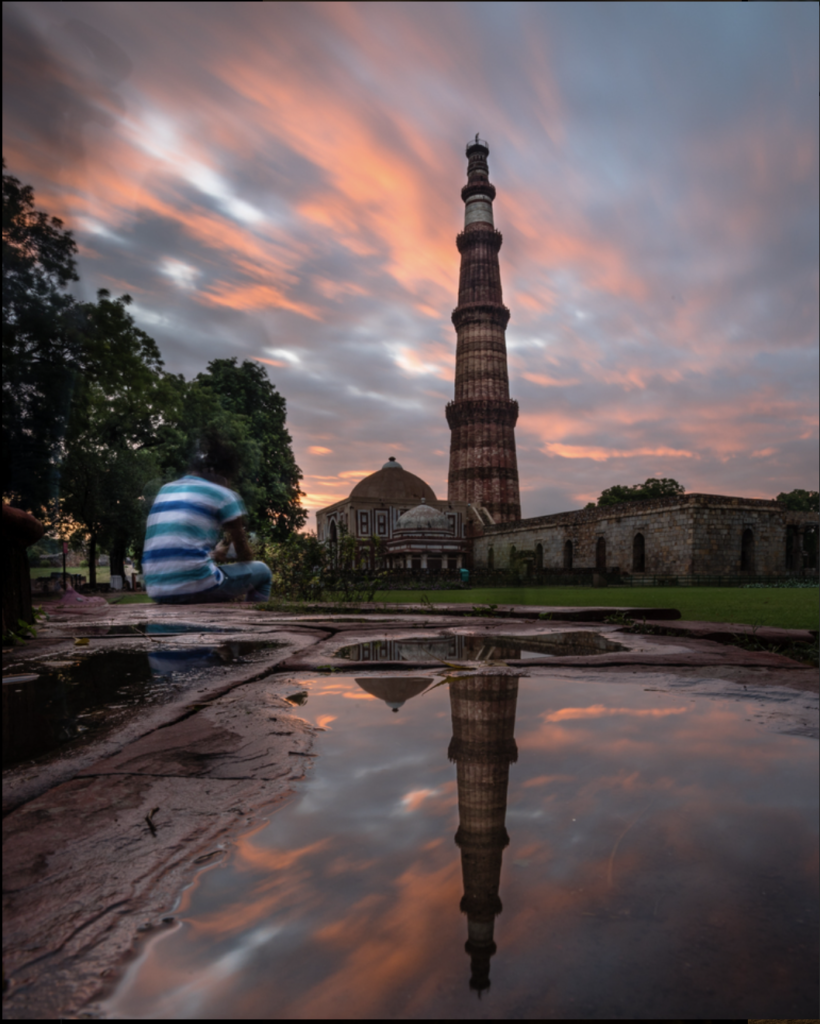
The Qutub Minar is undoubtedly one of the most popular and historic monuments of Delhi, embedded with the culture and history of the city. Apart from being the tallest brick tower in the world, it is a five storied structure made of brick. That is not to say it hasn’t undergone several damages and blows. In 1803, it suffered damages in an earthquake, however, Major Robert Smith, a member of the British Indian Army, came to its rescue and mended the structure. In 1981, after a stampede, 47 people died, and since then, entry to the tower itself has been restricted. It was built in the early 13th century, and is essentially a tower made of red sandstone, and stands 72.5 m high with alternating balconies and tapering stories above it. The Qutb mosque literally translates to the “Might of Islam”. It was built in 1192 by Qutb-ud-din Aibak, the first Sultan and then finished in 1368 by Firoz Shah Tughlaq. Now, it is under the protection of the Government of India, under its various rules and regulations.
https://whc.unesco.org/en/list/233/
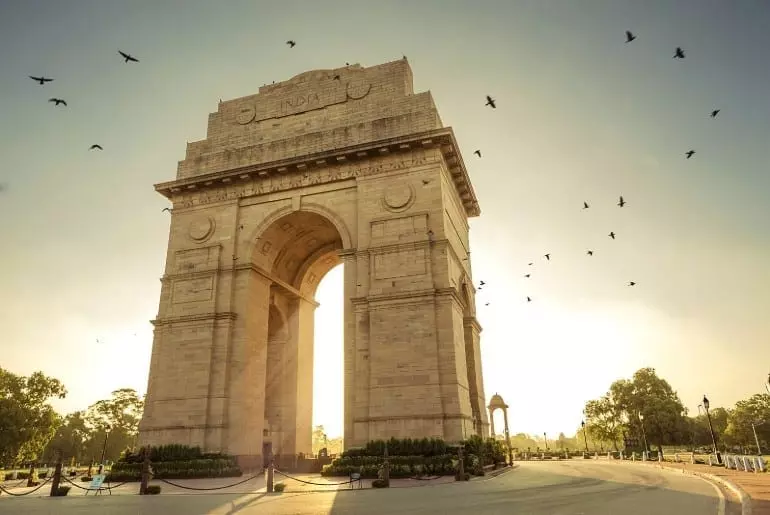
Set up in 1921 by the Duke of Connaught, and designed by Edward Lutyens (the famous architect), the India Gate counts amongst India’s top five famous monuments. The Amar Jawan Jyoti or eternal flame burns day and night, and was added after we got independence, to commemorate the lost lives of the soldiers in the India-Pakistan War of 1971, as well as the Afghan war of 1919. Some features include that it is made out of red Bharatpur stone, is 42 metres high and imperial suns are inscribed on it.
https://curlytales.com/reasons-why-delhis-india-gate-is-better-than-bombays-gateway-of-india/
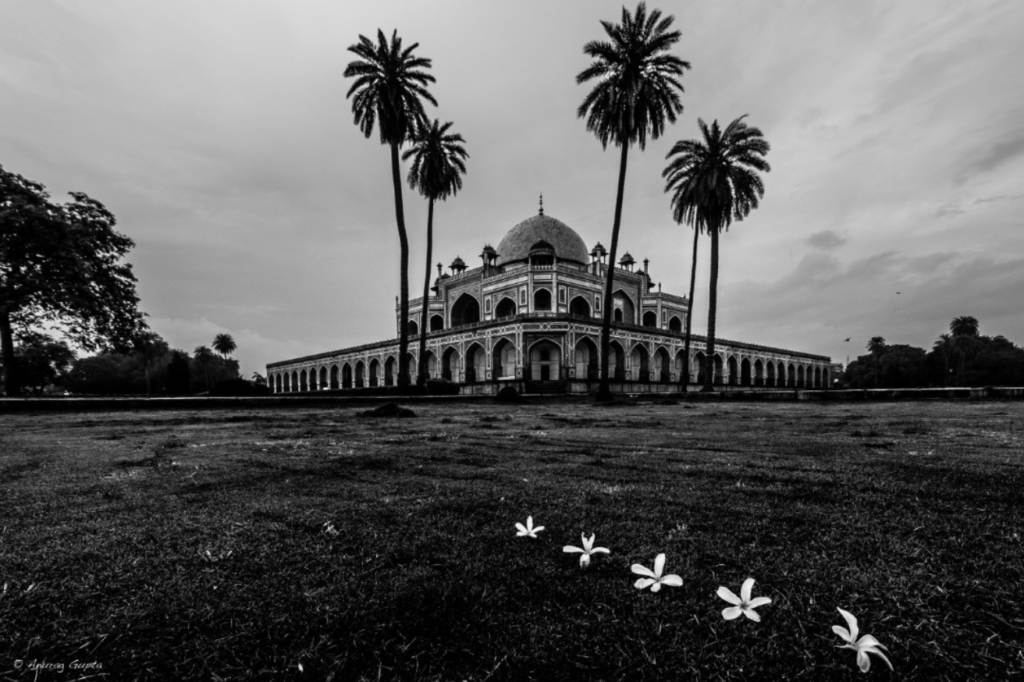
Humayun’s garden-tomb is built on a monumental scale, with its grandeur of design unprecedented in the Islamic world for a mausoleum. One of India’s first examples of Mughal architecture, the Humayun’s tomb was built in the 1560’s, under the guidance of the great emperor, Akbar. A fine example of Persian-Indo craftsmanship, it is otherwise known as charbhagh or four quadrant garden. It is located on a raised platform with double domed marble kiosks, as well as glazed ceramic tiles. Another name it is popularly known by is the dormitory of the Mughals.
Recent conservation efforts have kept in mind the urban landscape and thus an approach has been designed. This has been aimed at preserving the character and ensuring the preservation of the physical fabric of the tomb itself, thereby enhancing the significance of the traditions used by the Mughal builders.